

Curriculum Overview
The Richard Whittington child is an independent thinker and self-motivated learner who is open-minded to differing views and opinions. We are proud to offer a knowledge-based curriculum which stimulates our children to question and reflect, collaborate, respect and care as well as ignite aspirations for the future. Our curriculum is engaging, exciting and innovative, incorporating and embracing all curriculum areas.
Our curriculum has been designed to encompass knowledge and understanding of the world in which we live today and the events from the past which have shaped our present. Through its investigative and progressive design, they will be able to explore concepts deeper, applying their knowledge in different contexts.
We actively encourage all of our children to develop high expectations of themselves and to strengthen their own personal values, confidence and learning behaviours.
Our community is at the heart of our teaching and learning and topics have been selected to embrace the wider community in which we live - celebrating our diversity, links with our locality and charities – as well as expanding children’s knowledge of events and places they wouldn’t ordinarily visit or know about.
Character Compass
The Character Compass directs and empowers children to achieve their full potential. With the four cornerstones of Aspire, Question and Reflect, Respect and Care and Collaborate, our character skills inspire children to thrive with integrity as citizens of the world.
The Character Compass underpins our learning dialogue which deepens and enriches experiences, whilst ensuring that these fundamental skills are holistically developed. It is at the heart of our innovative, inquiry-based curriculum where children connect to real life, through engaging, stimulating and creative contexts and purposeful outcomes.
Growth Mindset
A short animation explaining the theory of growth and fixed mindsets:
The Learning Pit
Amazing video about how we can learn and achieve our potential through never giving up:

Art and Design Technology
Art
At Richard Whittington, we recognise that art and design stimulates creativity and imagination. It provides visual, tactile and sensory experiences and a special way of understanding and responding to the world. It enables children of all abilities to communicate what they see, feel and think through the use of colour, texture, form, pattern and different materials and processes.
We encourage children to explore ideas and meanings through the work of a range of artists and designers. Through learning about the roles and functions of art, they can explore the impact it has had on contemporary life and that of different times and cultures. The appreciation and enjoyment of the visual arts enriches all our lives.
Design and Technology
Design and technology is an inspiring, rigorous and practical subject. Using creativity and imagination, pupils design and make products that solve real and relevant problems, within a variety of contexts, considering their own and others’ needs, wants and values.
Children are taught to select and use appropriate tools safely and effectively to make a product. In all areas of design and technology the children are encouraged to consider the effectiveness of their designs and requirements of the product. Every child will have the opportunity to learn and extend their understanding, experience and application in the use of technology, including ICT, in a wide variety of situations.
Computing
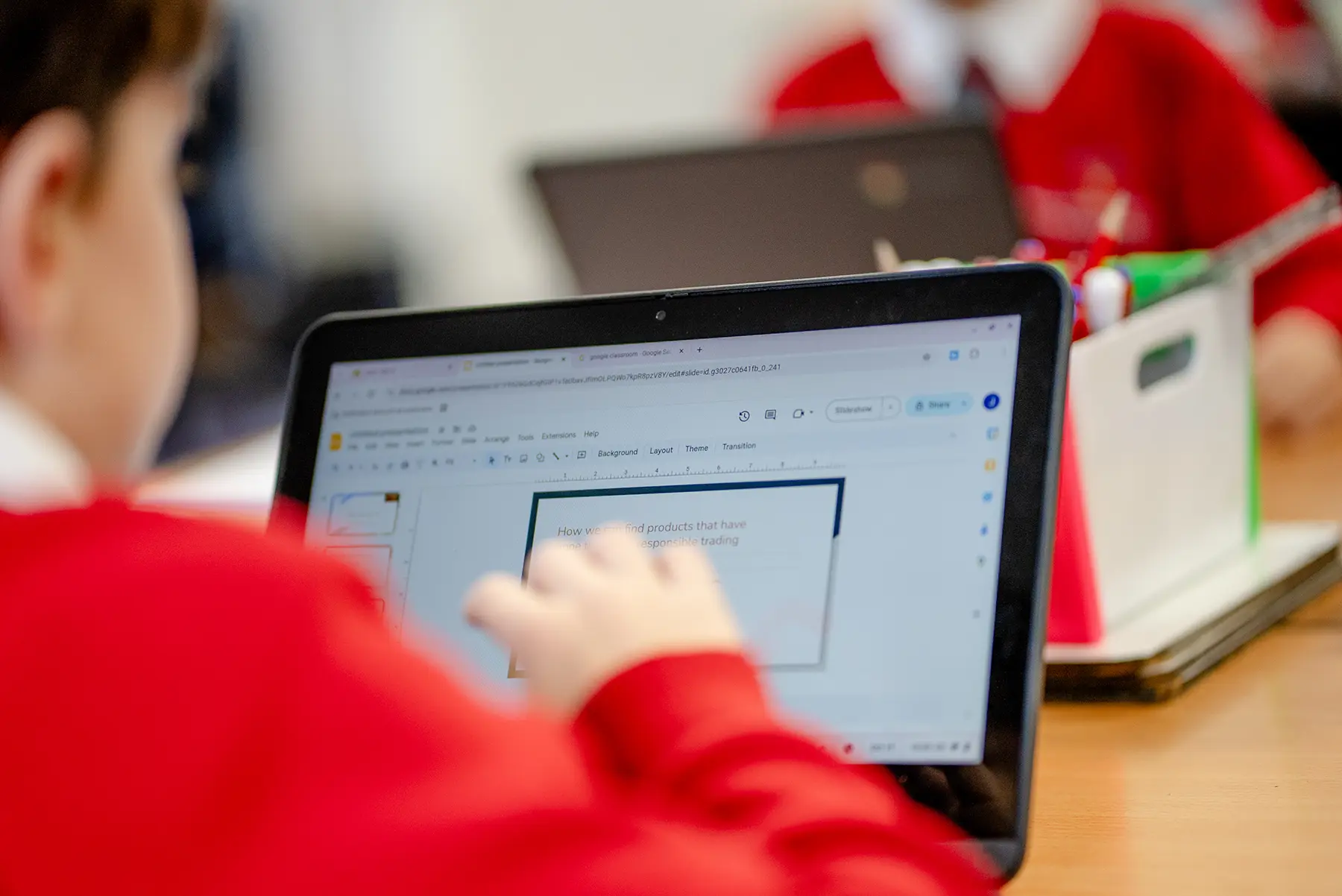
At Richard Whittington, we view computing as an integral component of the curriculum. Our overall aim is to teach explicit elements as well as enhancing learning in all areas of the curriculum through the use of computing.
In the context of the development of the computing strands, we teach our pupils to become confident in handling hardware, software and other computing equipment and to develop their basic coding skills and subject specific vocabulary.
Through our explicit teaching, children develop the ability to use computing equipment and begin to understand the role of computing encountered in daily life and in the wider world. It is envisaged that computing will enhance the process of teaching and learning in all areas of the curriculum, enhancing communication skills and creating a deeper understanding of its value in society.
Early Years
Children at the Foundation Stage (Early Years and Reception) follow carefully planned programmes of activities. There are three prime areas; communication and language, physical development and personal and social education.
There are then four specific areas; literacy, mathematics, understanding the world, and expressive arts and design. Each child is assessed daily which means staff can monitor their progress and attainment and reports are given to parents on a regular basis via Tapestry.
A large percentage of children’s time in Early Years is spent outside. This gives children the opportunity to explore their learning in a different context. The same areas are planned for outside, giving children constant access to reading, writing and mathematical skills as well as developing their understanding of the world around them and their social skills.

English
At Richard Whittington, mastering of the English language permeates everything we do. Our overarching aim is to promote high standards of literacy and language by equipping our pupils with a strong understanding of both spoken and written language, whilst trying to develop their love of literature through widespread reading for enjoyment.
We aim to provide a stimulating, interactive, fun and challenging English curriculum that prepares our pupils for life beyond our school and for the ever-changing world in which they live. We are passionate about valuing the notion that English underpins learning in every subject and work to ensure that there are significant opportunities across the wider curriculum for our pupils to embed their literacy skills.
We also aim to build a lifelong love of literature so that throughout their lives children can use the literary world as a means of escapism, relaxation and pure enjoyment.
Reading
We istil a love of reading in pupils through high-quality texts and providing many opportunities to read for pleasure and purpose. These include allocated reading time, buddy reading, reading with volunteers and opportunities to engage with authors. Our library encompasses a range of phonics books from Phase 1–6, as well as a large variety of fiction and non-fiction texts that are aligned with our library system, Accelerated Reader. This ensures pupils are reading books that are appropriate to their reading ability as well as being suitable for their age.
Pupils from Y2 to Y6 take a Star Reading quiz to establish which books are most appropriate for them to read. After reading each book, pupils take a quiz to assess their understanding of the text. Pupils also take their chosen books home to share with their parents and have opportunities to read aloud at home. The information from the quizzes provides valuable information for teachers to monitor and support pupils’ progress in reading. In class, pupils’ reading skills are developed through engaging with a wide range of reading material and media, with a focus on questioning to challenge thinking at all levels.
Reading lessons are centred around a class text and are split into three reading sessions across the week. The pre-teach lesson allows pupils to explore the language, vocabulary and context of the text. The close read session encourages pupils to read aloud fluently, with a focus on prosody and expression, as well as discussing and analysing a section of the text in more detail. The final session is a comprehension lesson, where pupils practise and develop key reading skills: retrieval, interpretation, authors’ choice and explanation.
Phonics
Little Wandle Phonics Progression
Little Wandle Phonics Mat
We believe that for all children to become fluent readers and writers, phonics must be taught through a systematic and structured programme. It is essential that our approach to teaching phonics and reading is accessible to all learners.
At Richard Whittington, we use Little Wandle Letters and Sounds Revised to plan and deliver daily, engaging phonics lessons. Children learn that letters and groups of letters represent sounds, and that these sounds can be blended to read and spell words. They are taught to recognise and use different grapheme representations and, over time, to ‘Grow the Code’, developing the knowledge and skills needed to tackle increasingly complex words. Phonics provides the foundations for reading and writing and equips children with the skills they need to become confident and independent readers and writers.
Our phonics teaching begins in Nursery and follows a carefully sequenced progression, allowing children to build on their previous knowledge and develop their phonic skills as they move through school. We model and reinforce these strategies in shared reading and writing, both within phonics lessons and across the wider curriculum.
Pupils are assessed regularly to identify any gaps in their phonic knowledge and to ensure that their decodable books are appropriately matched to their current level. Children are heard reading in small groups or individually throughout the week, with a focus on developing fluency, prosody and comprehension. They have regular opportunities to apply their phonic knowledge when reading and writing, including writing dictated sentences and using their skills independently across the curriculum.
Children complete the Year 1 Phonics Screening Check, and those who do not meet the expected standard continue to receive additional phonics support in Year 2 through the Little Wandle Rapid Catch-up programme. This provides targeted small-group teaching to revisit and secure the sounds, graphemes and words that children have not yet mastered, enabling them to continue developing their confidence and fluency as readers.

Writing
At Richard Whittington, we recognise that quality writing is a product of following a process of planning, crafting a range of engaging sentences, using success criteria, drafting and editing. From Nursery upwards, pupils are immersed in rich opportunities for writing and take great pride in improving their vocabulary and developing their individual writing style. Teaching spelling, punctuation and grammar skills is an integral part of our English lessons and pupils’ proficiency is developed through imaginative, stimulating and interactive activities.
Teachers use opportunities in our broad, balanced curriculum to further embed, extend and develop the writing skills of our students. Within our literacy lessons teachers follow a repeated pattern of ‘Initiate’, ‘Model’ and ‘Enable’ whereby they use the three zones of writing to provide a consistent whole school systematic approach to writing carefully constructed sentences, that are based on a strong teacher model in order to set high expectations for writing.
French
“To learn a language is to have one more window from which to look at the world.” ~ Chinese proverb
Learning a new language is a fun experience which can boost memory, improve concentration, and develop confidence. It can also fuel curiosity and inspire children to take a greater interest in other people, cultures, and the wider world. As France is one of our closest neighbouring countries, and French is one of the most widely spoken languages in the world, we consider this to be an exciting and relevant language for the children to learn. French is also among the languages offered at Key Stage 3 in most of our local secondary schools. The learning experience at Richard Whittington therefore provides a valuable foundation which pupils may build upon in the next phase of their learning.
From the outset, instructions are given in French to help tune children’s ears into the language. Through repetition and games, the children expand their French vocabulary and hone their pronunciation skills as they learn useful phrases on a variety of different topics. French stories and songs are also incorporated into the curriculum to provide an engaging learning experience which promotes memorisation. At each stage of their learning, pupils are introduced to basic French grammar rules, giving them a greater depth of understanding, and the tools they need to start manipulating the language.
Geography
Geography is challenging, motivating, topical and fun. In our diverse society, our children need to understand other people and cultures and we believe that geographical knowledge, concepts and skills are essential components of a broad and balanced curriculum and make a major contribution to children’s intellectual, social and emotional development.
At Richard Whittington Primary School, a high-quality geography education will inspire in pupils a curiosity and fascination about the world and its people which will equip them with knowledge about diverse places, people, resources and natural and human environments, together with a deep understanding of the earth’s key physical and human processes.
As pupils progress, their growing knowledge about the world will help them to deepen their understanding of the interaction between physical and human processes, and of the formation and use of landscapes and environments. We also aim to ensure that children have a wide knowledge of the world and their own human impact on it and that they have the skills to collect and communicate this with others.


History
We believe that history fires pupils’ curiosity about the past in Britain and the wider world. We aim to bring history to life and to instill a desire to find out about our predecessors. We view history as far more than learning facts, and as an opportunity to develop skills of enquiry and questioning deeply and expertly; to become open minded “historical detectives” and explore the past in an engaging way.
Termly and half termly topics give scope for cross curricular work and children learn to make comparisons and links between the past and modern times and discover how and why things have changed. They learn about people and events in the past, in Britain and the wider world, and realise that these have influenced our lives today. In doing so, children are taught how to investigate and record their findings in interesting and creative ways including writing, art, drama and computing.
Maths
We believe that it is vital for all our pupils to make sense of the patterned and numeric world around them. We aim to provide pupils with a secure understanding of number, place value, the four operations, fractions, geometry, measure and statistics, to enable them to solve real life problems. We encourage our pupils to ask questions, make relationships between number and approach problem solving in creative ways. Maths is taught throughout the school daily and children are actively encouraged to use and demonstrate their maths skills across the wider curriculum.
Lessons are carefully crafted in order to foster deep conceptual and procedural knowledge. Whole class discussions and precise questioning during lessons ensures that pupils develop fluent technical proficiency and think deeply about the underpinning mathematical concepts. A variety of concrete and pictorial representations are used to introduce and explore a concept effectively.
Addition and Subtraction Calculation Policy
Multiplication and Division Calculation Policy
Mastering Maths - Reception Workshop
Mastering Maths - Year 1 Workshop
Mastering Maths - Year 2 Workshop

Music
Music School Development Plan
Why Teach Music?
Music is a universal language that embodies one of the highest forms of creativity. A high quality music education should engage and inspire pupils to develop a love of music and their talent as musicians, and so increase their self-confidence, creativity and sense of achievement. As pupils progress, they should develop a critical engagement with music, allowing them to compose, and to listen with discrimination to the best in the musical canon. ~ National Curriculum Music (2014)
Our music curriculum aims to live out our vision and values in our delivery of interesting, challenging and engaging music lessons and wider musical opportunities.
Ambition
Our curriculum is based on the Charanga programme and selects the units of work that best suit our learners and the vision we have for them. It is rigorous, ambitious and ensures that by the end of KS2 all children will:
- Have been exposed to a wide range of rich and varied musical experiences.
- Have explored different musical genres and the cultures surrounding them.
- Have an emerging understanding of the language of music.
Collaboration
Collaboration forms a fundamental part of music making at our school. During lessons, children will have the opportunity to work as a whole class, in small groups, in pairs and independently.
Children will work as an ensemble in various forms eg choir, chamber group, orchestra, duet partners and develop their performing and composing skills in these groupings. Musical collaboration is enhanced through our wider opportunities provision for music, which includes performing with Young Voices at the O2, joining with other schools in local mass music making festivals in Years 2 and 5, and singing in the combined schools Year 6 Carol Service.
Challenge
Our music curriculum is based on the Charanga programme and is enhanced by quality listening, performing and composing opportunities. We encourage children to make links between their music making and other subjects in the wider curriculum. By the end of KS2 all children will have been exposed to musical language and notation.
OPAL – Outdoor Play and Learning
Amazing playtimes, every day!
At our school, we believe that play is an essential part of every child’s learning and development. That is why we have invested in OPAL (Outdoor Play and Learning), a programme designed to improve the quality of play opportunities for all children.
OPAL is based on the understanding that children learn not only through excellent teaching in the classroom, but also through the experiences they have when they play. Playtime makes up approximately 20% of a child’s time in school — the equivalent of around 1.4 years of primary education. We want to make sure that every one of these moments is as valuable, enjoyable and enriching as possible.
OPAL’s mission is:
“To ensure that every schoolchild has an amazing playtime every day, with no exceptions.”
Why is play so important?
Play provides children with opportunities to explore, experiment, discover and learn in ways that are meaningful to them. Through play, children develop essential life skills, build friendships, solve problems and learn how to navigate challenges.
Our OPAL approach encourages children to be active, imaginative and independent, while learning to cooperate with others, manage risks and develop confidence in their own abilities.
We want every child to enjoy playtimes that are exciting, inclusive and full of opportunities to learn.
Through OPAL, we aim to:
- Encourage curiosity and creativity by providing varied, challenging and stimulating play environments.
- Build confidence and resilience by allowing children to take appropriate risks and learn from their experiences.
- Develop friendships and social skills through shared play, communication, negotiation and cooperation.
- Promote respect and responsibility towards one another and the environment in which we play.
- Support the whole child by nurturing physical, emotional, social, spiritual and intellectual development.
- Inspire imagination through opportunities for role-play, exploration, invention and creative expression.
- Enhance learning across the curriculum by connecting play with real-life experiences and a wider understanding of the world.
- Develop independence and teamwork by encouraging children to make choices, solve problems and work collaboratively.
- Promote physical and emotional wellbeing through active play, challenge, enjoyment and opportunities to overcome difficulties.
What does OPAL look like at our school?
OPAL encourages us to think creatively about how we use our outdoor spaces and the resources available to children. Rather than limiting play to traditional playground equipment, we aim to provide a rich variety of opportunities for children to explore, build, create, imagine and play together.
Children are encouraged to follow their interests, make decisions, collaborate with friends and discover new ways to use their environment. Through this approach, playtimes become opportunities for adventure, problem-solving, creativity and personal growth.
We also recognise the importance of appropriate risk-taking. With thoughtful supervision and risk-benefit management, children can develop the judgement, confidence and resilience they need to face new challenges.
Working together for better play
Creating amazing playtimes is a whole-school commitment. By embracing OPAL, we aim to build a positive play culture in which every child feels included, valued and able to participate.
We want our children to look forward to playtime, enjoy spending time with their friends, explore their interests and return to the classroom ready to learn.
Our goal is simple: happy children, meaningful play and amazing playtimes every day.


Oracy
At Richard Whittington, we value the importance of developing pupils’ oracy skills as we believe the ability to listen actively, speak clearly and communicate articulately is a fundamental part of the learning process. Therefore, we use the oracy framework to understand the physical, linguistic, cognitive and social and emotional skills that enable successful discussion, inspire speech and develop effective communication. All lessons across the curriculum are rich in discussion and questioning and are carefully planned out to ensure that all pupils can fully participate.
PE
In this area children are encouraged to be as successful as possible in all aspects of movement. Physical Education forms an important part of the total education of the child. It aims to promote the normal growth and development of each child and to give children a greater understanding of themselves and their physical capabilities.
Our main concern is to encourage efficient movement through a strong and healthy body. Children will experience a wide range of activities including gymnastics, games, athletics, dance and swimming. The teaching of skills in class is reinforced through a range of extracurricular activities appropriate to the age of each child.
The school sports days during the summer term are days when children can apply the skills they have learnt, in an atmosphere encouraging their full participation and enjoyment. There are also opportunities throughout the school year for the children to take part in whole school days around a specific sport that they may normally not have the chance in PE to take part in, such as American football.
The children in Years 2 to 6 attend swimming lessons at Grange Paddocks Pool. For this activity to continue it is necessary to ask for voluntary contributions towards the cost of the transport.

RE
The ethos of the school forms the basis of moral education at Richard Whittington. We expect everyone in the school to show respect for others and their opinions. Our teaching includes all the major world religions and cultures. Major religious festivals are celebrated in a variety of ways and as the children progress through the school, we aim to develop a deeper understanding of those festivals.
Aims of our RE Curriculum
To gain deep understanding and knowledge to create a broad understanding of, and make connections between, the beliefs and cultures of other people and how they link to their own lives and experiences.
To explore beliefs and values behind religions and cultures through purposeful and meaningful questioning. Then, reflect and evaluate to form open minded opinions based on empathy and understanding.
Curriculum Intent
We have designed our RE curriculum with the intent that our children will become open minded, empathetic, accepting and inquisitive learners. We believe it is important for all pupils to learn from and about world religions and cultures as this encourages pupils to develop their own sense of identity and belonging through self-awareness and reflection.
The teaching of RE is vital for children to understand others’ beliefs and make connections between their own lives and experiences. We aim to engage pupils in an enquiry approach where, through purposeful and meaningful questioning, they can develop an understanding and appreciation for the expression of beliefs, cultural practices and influence of principal religions in the local, national and global community. We strive to include and promote equality and an understanding of British Values, ensuring that children are aware of their rights and responsibilities as UK citizens.
The Right of Withdrawal from Religious Education
The RE syllabus is relevant to all pupils and respects personal beliefs. We welcome parents / carers to discuss our RE curriculum.
Parents have the right to withdraw their child from all or part of the RE curriculum. We have a duty to supervise any pupils who have been withdrawn from RE, but not to:
- Provide additional teaching that is not RE.
- Incur extra cost.
PSHE
At Richard Whittington, the personal, social and health development of the child is a central focus of education. Elements of PSHE and Citizenship are taught as separate subjects as well as integrated into all areas of the curriculum and the life of the school. The teaching of this subject now also includes education on drugs.
The school has set up a school council with elected representatives from Year 1 to Year 6. The council’s role is to meet and to hear the views of the children, taking forward ideas and suggestions to the Headteacher.
We also have a Learning and Wellbeing Mentor who works across the whole school, supporting children with emotional or social worries and concerns and developing their confidence and resilience.
Sex and Relationships Education (SRE)
This policy stresses the value of family life, and discusses the importance of caring relationships between people. The care of all living things is central to our approach and the nature of human reproduction is considered in increasing detail as children grow up.
In Years 5 and 6, our school nurse works alongside the class teachers to prepare the children for forthcoming pubertal changes and their implications. Linked to this is reassurance that bodily changes, both physical and emotional, are quite normal and acceptable. Help is given in adjusting to these changes whilst emphasising the importance of personal hygiene. A fuller account of our approach to sex and relationship education can be consulted in school. We shall keep parents informed about our arrangements for teaching this subject.
Collective Worship (Assemblies)
Collective worship (assemblies) is held every day and takes a variety of forms including whole school assemblies, Key Stage assemblies and class assemblies. We like to end the school week with a whole school assembly where we can all celebrate success.
At all times we promote positive attitudes and encouragement so that children can develop a good self-image and have confidence in themselves.
Science
At Richard Whittington, our vision is to develop enthusiastic and creative scientists, who not only have a secure understanding of the world around them, but a desire and a means to discover even more.
- Create inquisitive learners with a greater understanding of the world around them.
- Enable children to question and challenge their thinking to deepen their knowledge and understanding.
- Children collaborate to combine practical and investigative elements through different routes of scientific enquiry.
- Build on prior learning and scientific enquiry skills through making links and fostering independence.
At Richard Whittington, we:
- Ask questions to learn about the world around us.
- Challenge ourselves to do our best and think deeply.
- Work together to investigate questions and ideas.
- Connect new learning with what we already know.
Throughout the school children will investigate scientific ideas in relation to: themselves and other living things; the properties of natural and man-made materials; the effect of forces; sound; and light. They will be taught how to present their findings in writing, diagrams, charts and discussions. In all practical activities, children will be encouraged to take managed risks, with health and safety issues being stressed.